News
Ford Rehires Engineers After AI Quality Control Falls Short
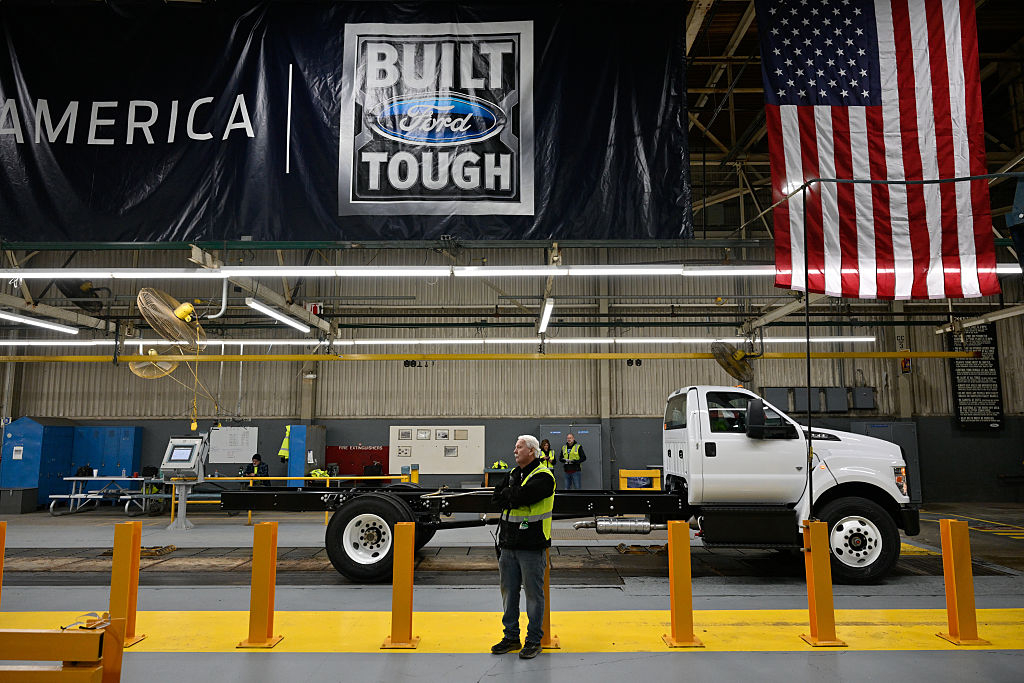
Ford admits that over-reliance on AI-driven quality control hurt vehicle quality, prompting the automaker to rehire 350 experienced engineers who helped reprogram its AI tools.
Ford has admitted that leaning on automated, AI-based quality control systems instead of experienced engineers was a mistake. The automaker rehired around 350 engineering veterans, some former Ford employees, others from supplier companies, to repair the damage and reprogram its AI tools from the ground up.
Where the AI fell short
Charles Poon, Ford's vice president of vehicle hardware engineering, admitted outright that the company had wrongly assumed that simply feeding design requirements into AI would automatically yield a high-quality product. Reality proved different, as experienced staff left the company before they could pass on their knowledge to the systems meant to replace them.
Kumar Galhotra, Ford's chief operating officer, described it as a growing reliance on automated quality control systems that failed to meet expectations. The newly hired engineers, jokingly nicknamed "gray beards" inside the company, are tasked with catching potential defects before some of them reach the production line, something the algorithms could not do reliably enough.
Financial and quality impact
Ford CEO Jim Farley said that bringing back experienced engineers translated into hundreds of millions of dollars in savings through lower warranty costs and fewer service repairs. Ford topped the JD Power Initial Quality Study ranking among mass-market brands for the first time since 2010, a result the company directly links to returning to a hybrid model that combines AI with human oversight.
Crucially, Ford has not abandoned AI altogether. The newly hired engineers were brought into the process of reprogramming the automated systems, feeding them the knowledge that was missing from the original training data. At the same time, those same engineers are training junior staff, rebuilding the expertise the company had previously lost through employee departures.
What it means for the industry
Ford's case lands right in the middle of the debate over how fast and how far industrial companies should go in replacing experienced workers with AI-based automation. The story shows that losing institutional knowledge that wasn't transferred to digital systems in time can cost more than automation saves, especially in industries where a quality mistake means costly warranty repairs at scale.
For Polish manufacturing companies that have spent recent years rolling out quality control systems based on computer vision and predictive models, Ford's example is a warning sign. Technology on its own, without maintaining the team expertise that feeds it data and verifies its output, can produce worse results than a traditional approach, especially in the early years of deployment, before the models are tuned to real factory conditions.